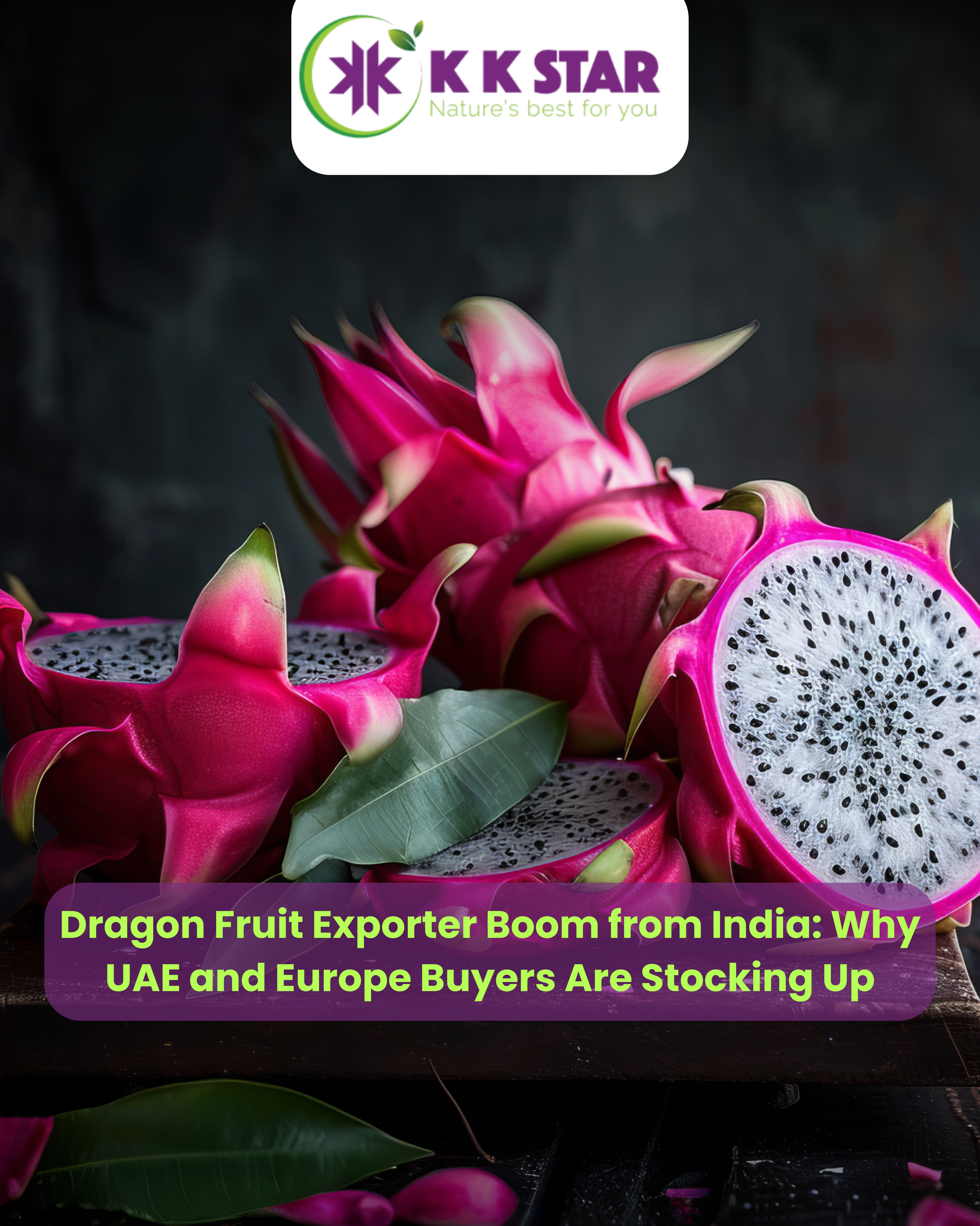
Isn’t it interesting? A few years ago, most people in India hardly knew about dragon fruit. In some regions, we called it “kamalam,” and it felt like an exotic item found only in premium stores. Today, India has turned into a fast-growing Dragon Fruit Exporter to the UAE and Europe. Surprising, right?
Let’s talk about why this colourful fruit is suddenly becoming a global favourite.
Why India Is Emerging as a Strong Dragon Fruit Exporter
A New Star in Fruits Export From India
If you are a buyer in Dubai or London searching for something fresh, nutritious, and visually attractive, dragon fruit is the perfect pick. With bright pink skin, antioxidant-rich flesh, and an Instagram-friendly look, it easily stands out.
Thanks to improved farming, India is now moving ahead among the leading Indian fruit exporters, especially in dragon fruit.
You can learn more about our journey here: https://kkstar.in/
Best Climate for Quality Production
India’s semi-arid regions, especially Gujarat, Maharashtra, Karnataka, and parts of Rajasthan, offer the perfect weather for dragon fruit farming. The crop loves warm temperatures, needs little water, and grows well even in tough conditions. For any Dragon Fruit Exporter, this gives India a natural advantage.

Farmers Growing Smarter and More Organic
Indian farmers are not just producing more dragon fruit; they are mastering it.
They now understand:
- When to harvest for perfect sweetness
- How to handle the fruit gently
- How to use organic farming techniques
- Best post-harvest practices
Many farms are becoming organic-certified, which European buyers appreciate a lot.
Competitive Pricing: A Bonus for Importers
If you’re a supermarket in Germany or a distributor in Dubai, you want high quality and reasonable pricing. Indian dragon fruit checks both boxes. This balance of quality and affordability makes India an ideal choice for buyers and strengthens our position as a Dragon Fruit Exporter in global markets.
Why the UAE and Europe Are Increasing Imports
The UAE Market: Quick Growth and Fresh Supply
Walk into any premium store in Dubai, and you’ll likely find Indian dragon fruit displayed beautifully. Shipping distance from India to the UAE is short, which keeps the fruit fresh.
With rising health awareness in the UAE, the fruit’s low-calorie, high-fibre qualities make it popular among fitness-minded customers.
Europe’s Growing Interest
Countries like the UK, the Netherlands, and Germany are increasing their demand for Indian dragon fruit every year. They value:
- Organic certifications
- Consistent, year-round supply
- Better pricing compared to many other exporters
For more industry insights, you may check: https://mkexports.co.in/
The Numbers Tell the Growth Story
Over the past five years, India has seen a huge expansion in dragon fruit farming. States like Gujarat have added thousands of hectares dedicated to this crop. APEDA and government programs are encouraging farmers to shift to high-value crops, and dragon fruit is one of the biggest beneficiaries.
Training programs, improved cold storage, and upgraded logistics now help exporters maintain top quality during transport, a must for every Dragon Fruit Exporter aiming for long-term success.
What Lies Ahead for Fruits Export From India
There are challenges like strict European pesticide rules and competition from Vietnam and Thailand. But Indian exporters are responding with:
- Better packaging
- International certifications
- Stronger buyer relationships
All these steps boost confidence in Fruits export from India and strengthen India’s global presence.
Conclusion
From being a lesser-known crop to becoming a major export product, Indian dragon fruit has seen an incredible journey. Buyers in the UAE and Europe value not just its appearance but also India’s quality, pricing, and reliable supply chain.
For farmers, this means better income opportunities. For exporters, it opens up a fast-growing global market. And for international buyers, it ensures a steady supply of a trendy, nutritious fruit.
The rise of India as a Dragon Fruit Exporter shows how Indian agriculture is evolving more diverse, more quality-focused, and more connected to global markets. And this journey is only getting started.